Add 2 more items to unlock your free mystery gift.
Complimentary item.
Total
Recommended add-on
Home/Victron SmartShunt vs BMV-712: Which Battery Monitor Should You Buy?
Victron SmartShunt vs BMV-712: Which Battery Monitor Should You Buy?
If you're building or upgrading a Victron-based power system, you've probably hit the same fork in the road: SmartShunt or BMV-712? Both are excellent battery monitors that track voltage, current, and state of charge, but they're designed for slightly different needs. In this head-to-head, we'll compare the two to help you decide which one deserves a spot in your setup.
A Quick Look at the Two
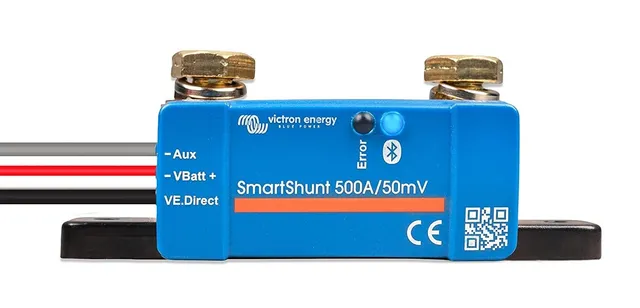
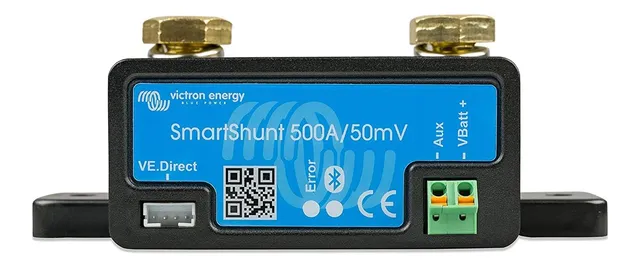
The Victron SmartShunt is a sleek, no-nonsense monitor that connects to your phone via Bluetooth – no display included. It's perfect for remote monitoring from your smartphone, and it's a favorite among van-lifers and boaters who want to keep things clean and minimal.
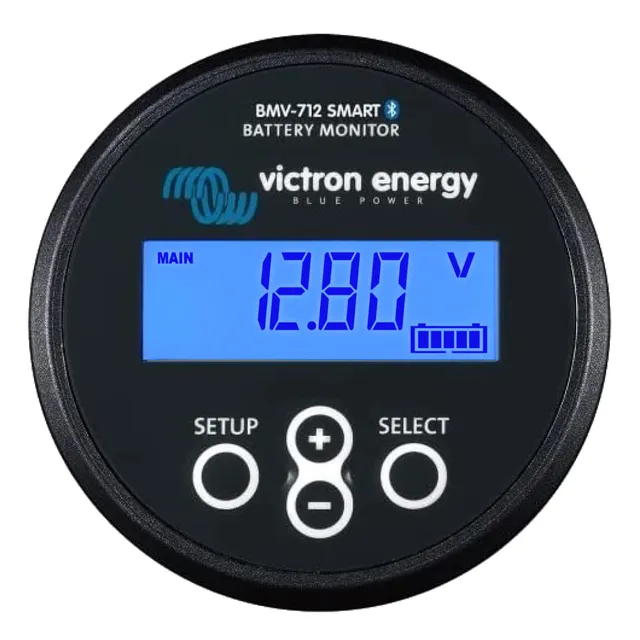
The Victron BMV-712, on the other hand, is the veteran workhorse. It comes with a dedicated display that shows essential data at a glance, plus Bluetooth built-in. It's ideal for those who want a physical readout on the wall or in a control panel, without pulling out a phone every time.
The most obvious difference is the display. The BMV-712 has a built-in LCD screen that shows state of charge, battery voltage, current, and power draw in real time. The SmartShunt has no screen – you'll get all that data on the VictronConnect app over Bluetooth.
If you enjoy walking past your electrical panel and seeing your battery status at a glance, the BMV-712 is the winner. But if you prefer a clutter-free installation and are happy to check on things from your phone, the SmartShunt is just as effective.
2. Bluetooth & Monitoring
Both units feature built-in Bluetooth, so you can monitor your batteries from your phone or tablet via the VictronConnect app. The app is consistent across both, giving you the same data, graphs, and historical trends.
An important note: the SmartShunt's Bluetooth is always on, while the BMV-712's Bluetooth can be toggled – but that's not a huge deal. The real advantage of the BMV-712 is that it can be connected to a Cerbo GX via VE.Direct for even more advanced system integration, though the SmartShunt can do that too with an extra cable.
3. Installation & Wiring
Both are designed for simple installation. You'll need to connect the shunt in series with your battery's negative lead, and then power the monitor. The SmartShunt and BMV-712 both come with a shunt rated for 500A, suitable for most 12V, 24V, and 48V systems.
One difference: the BMV-712 is powered from its shunt and includes a separate display that requires a bit more wiring. The SmartShunt's all-in-one design is cleaner – just one small module you can mount anywhere. If you're tight on space, the SmartShunt might be easier to tuck away.
4. Programming & Customization
Both monitors are highly configurable. You can set battery capacity, charge efficiency, and even temperature compensation if you add an optional sensor. The BMV-712 has a few extra settings like a relay that can be programmed to trigger alarms – something the SmartShunt lacks.
If you need a relay output to control a generator or trigger a warning light, the BMV-712 is your only choice. Otherwise, both offer plenty of tweaking via the app or display buttons.
Should You Buy the SmartShunt or BMV-712?
Choose the SmartShunt if:
You want a minimalist, no-display setup.
You're comfortable monitoring from your phone.
You have a 48V system (the BMV-712 is limited to 70V, but the SmartShunt handles higher voltages).
You want the same core monitoring at a lower price.
Choose the BMV-712 if:
You want a physical display in your living space.
You need a relay output for alarms or automation.
You prefer to check battery status without opening an app.
You're planning to integrate with a Cerbo GX and want the complete Victron ecosystem.
In our experience, the SmartShunt is the best value for most users. It gives you the exact same monitoring data as the BMV-712 – voltage, current, power, and state of charge – at a lower price tag. The lack of a display isn't a downside if you're naturally a phone-in-hand kind of person, and the all-in-one design simplifies your enclosure.
The BMV-712 shines in more complex systems, especially if you're already investing in a Cerbo GX and want an all-in-one control panel. The relay output is genuinely useful for triggering alarms or remote disconnect, something you'll appreciate in off-grid cabins or serious marine installations.
If you're on the fence, ask yourself: “Do I ever want to see my battery status without pulling out my phone?” If the answer is yes, go BMV-712. If not, save yourself some cash and get the SmartShunt.
Yes, the SmartShunt can be connected to a Cerbo GX via a VE.Direct cable (not included). This lets you see the same data in the VRM portal and control things remotely.
Does the BMV-712 work on a 48V system?
The BMV-712 is rated for 6.5-70 VDC, so it works fine on 48V systems. However, the SmartShunt IP65 version is also rated for 48V, so both are suitable.
Why is my SmartShunt state of charge wrong?
This is usually a calibration issue. Make sure you've set the correct battery capacity and charge efficiency. Also, the monitor needs to see a full charge cycle to reset to 100%. If it's still off, check the shunt connections – a loose wire can cause big errors.
Can I connect both a SmartShunt and a BMV-712?
Technically yes, but it's redundant. You'd be monitoring the same battery with two monitors – no benefit.
Our Verdict
For most DIY van, boat, or off-grid enthusiasts, the SmartShunt is the smarter buy. It delivers all the essentials, looks clean, and saves you money. The BMV-712 is a worthy upgrade if you need a display or relay functions, and it integrates beautifully into a full Victron system.
Whichever you choose, you'll get a reliable, accurate battery monitor that keeps you informed about your power reserves – and that's half the battle. If you have questions about which one fits your setup, drop a comment below or reach out to our team.